Tail threading is the process of guiding a continuous sheet through multiple rollers. It is a critical step in paper, board, and textile production, especially after a break or during startup.
This thesis investigates the development of improved methods for tail threading in flooring mat production, which is heavier compared to paper and textile production, to reduce operator physical effort and enhance safety.
The current manual threading process at Tarkett AB involves considerable physical effort and safety risks for operators, particularly in tight spaces and areas with limited visibility.
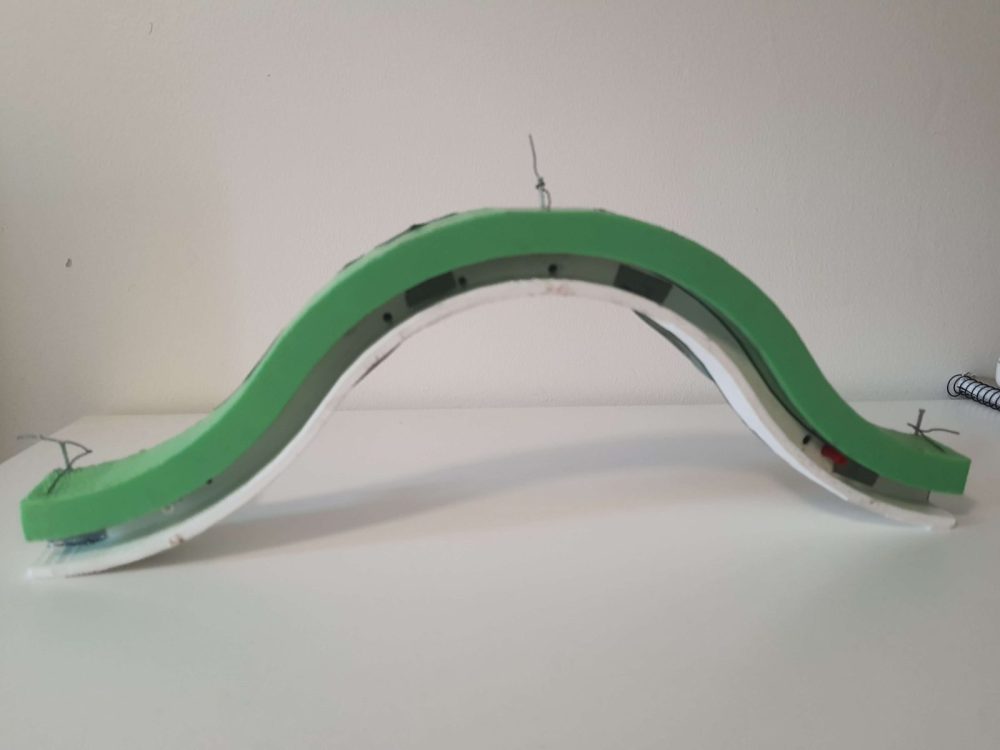
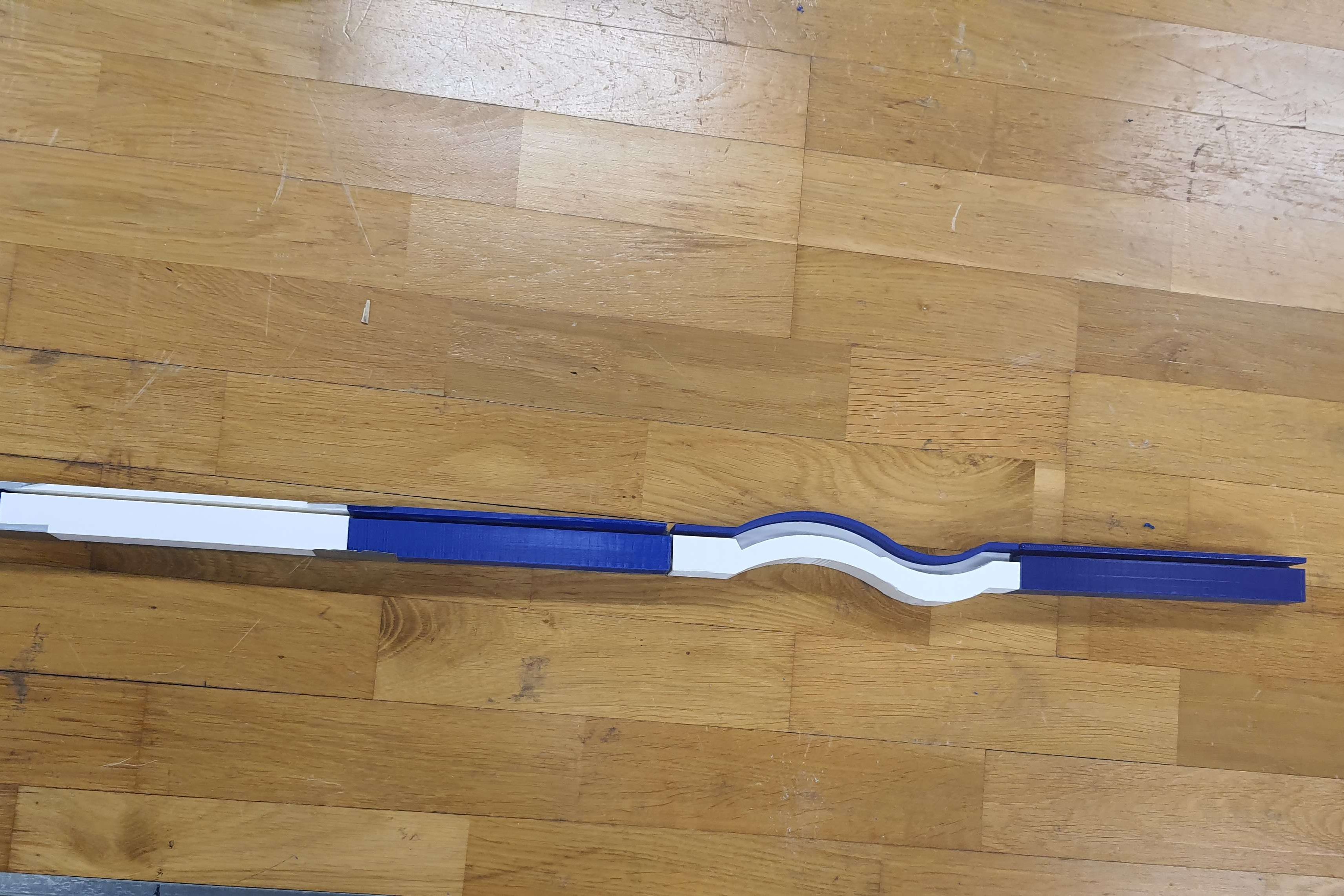
Using the Design Thinking methodology, this study developed six distinct concepts to replace manual threading. The iterative process involved multiple phases, including empathizing with operators, defining the problem, ideating solutions, prototyping, and testing. A weighted decision matrix was utilized, and the concepts of tube threading and wire tracking were combined and tested. The final iteration features a track with a guide hole for the wire, a retractable gate, and two movable tubes that blow the wire onto the rollers.
Additionally, two concepts for connecting the wire to the flooring mat were investigated. The hybrid combined concept was not tested on the production line. However, it has the potential to improve ergonomics and reduce manual labor, as operators would no longer need to thread the flooring manually. Additionally, many parts of the concept could be automated. The findings suggest that design thinking can address well-defined industrial problems, offering insights into the broader application of Design Thinking in structured engineering contexts.
Future work includes full-scale testing on the production line and exploring additional concepts to further optimize the threading process.
By Hashem Yaser Abo Kaleifa & Abdirashid Bashir



 BTH Innovation Labs